
- Entering text into the form field will trigger a list of options
Trending Searches
- Invest / Login
Does SIP Really ‘Mature’? What Happens When SIP Tenure Ends

Last Updated On: 3 Aug 2026

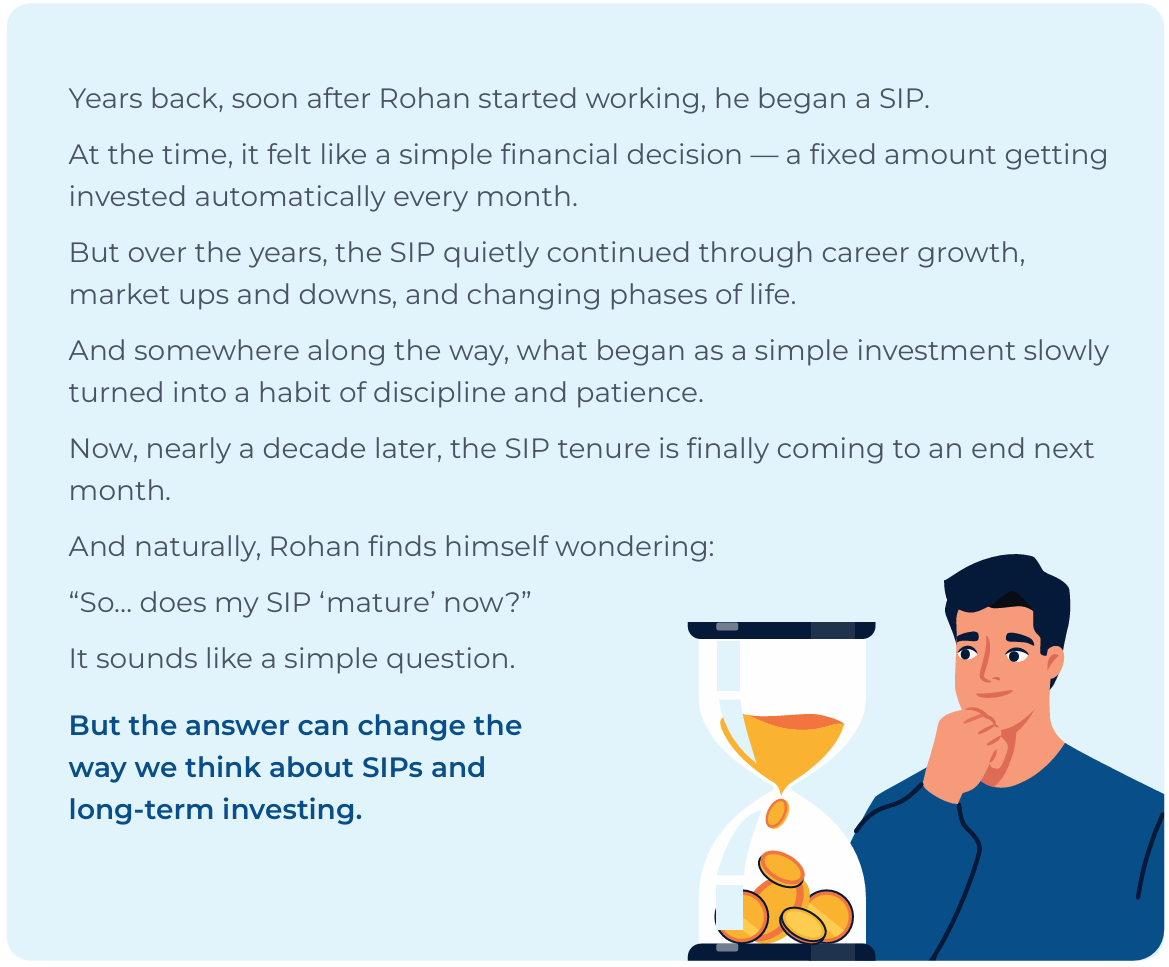
“My SIP is maturing next month.”
It’s a phrase many investors use naturally.
After all, many traditional financial products come with an end date:
mature


complete their term
So, it feels logical to assume SIPs work the same way.
But they don’t.
Because a SIP is not actually a financial product by itself.
A SIP (Systematic Investment Plan) is simply a method of investing regularly into a mutual fund.
The actual investment is through the Mutual Fund scheme. The SIP is only the route through which money gets invested.
Think of it like a standing instruction to transfer money periodically into an investment. If that instruction stops, the investment itself does not disappear.
Which means:


It simply means the periodic investments stop.
Your accumulated investment continues to remain invested in the mutual fund scheme unless you choose to redeem it.
This is an often misunderstood aspect of SIP investing.
Many investors assume:
“My SIP tenure is over, so my investment is complete.”
But stopping a SIP and stopping an investment are two very different things.

Even after SIP contributions stop, your accumulated units continue participating in the market, and compounding can continue working over time.
In open-ended mutual fund schemes, there is no fixed maturity date.
Thinking of SIPs as products that “mature” can sometimes lead investors to make decisions that may not align with their financial goals.
For example, investors may:


This can interrupt the compounding journey midway.
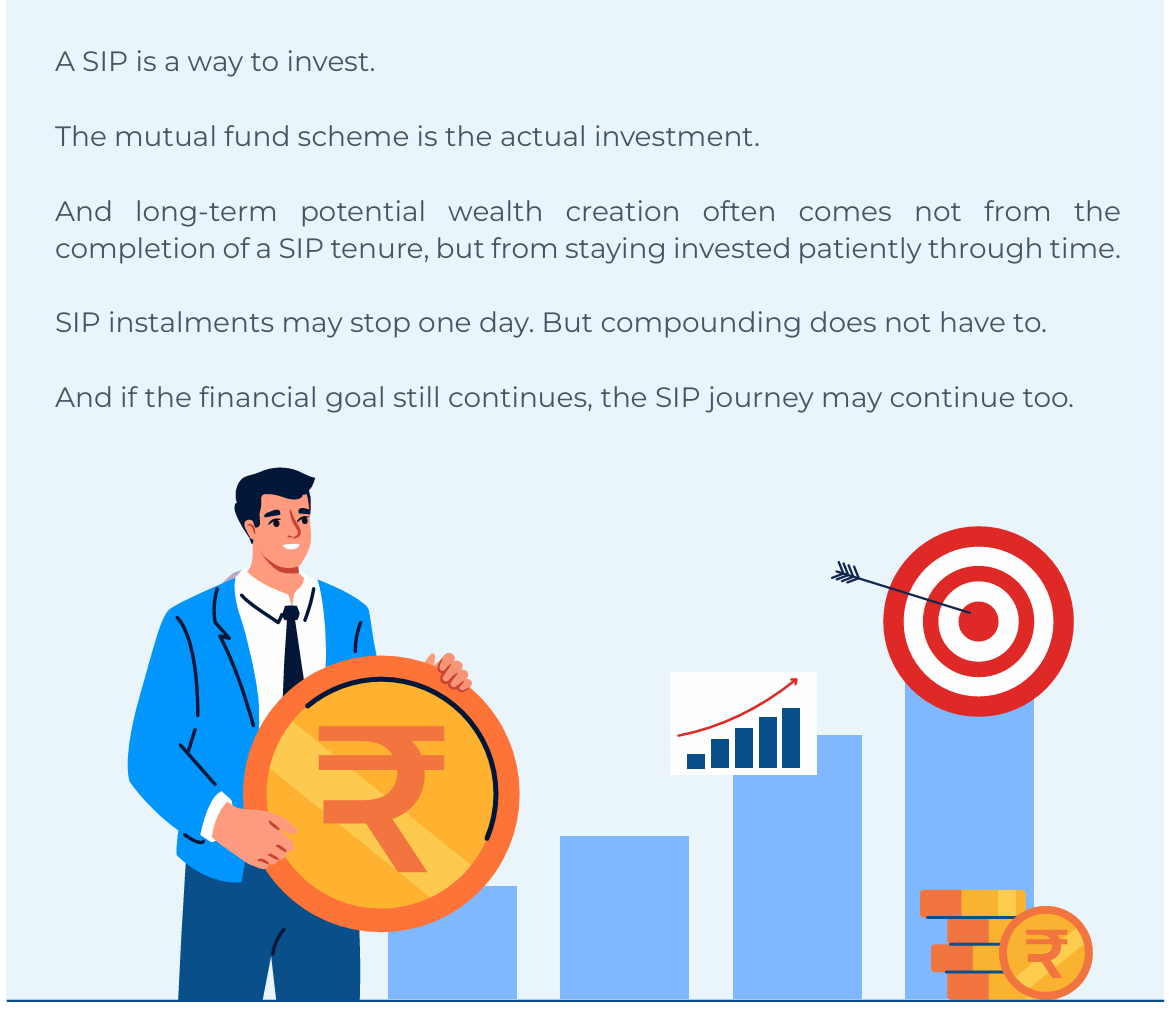
Because in long-term investing, potential wealth creation often depends less on when the SIP stops and more on how long you stay invested.
One of the purposes of SIP is to solve a behavioural problem more than a market problem.
They help investors:





The real strength of SIPs lies in consistency — not in the completion of a tenure.

Because financial goals may not always align with SIP tenures.
A retirement goal may still be years away even if a SIP instruction has ended.
A child’s education goal may still need several more years of compounding.
The investment journey should ideally be guided by the goal — not merely by the SIP duration selected at the beginning.
Continuing a SIP for longer periods — and more importantly, staying invested patiently — can be rewarding over time.
To understand how time influences potential wealth creation, consider this illustration:
Example: Monthly SIP of ₹10,000 in HDFC Flexi Cap Fund
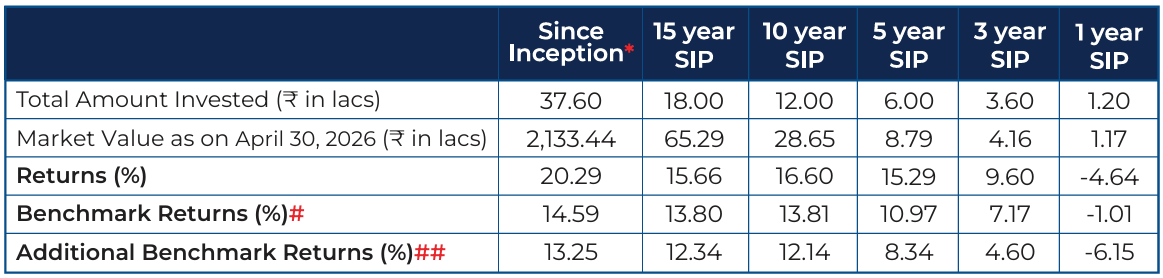
HDFC Flexi Cap Fund - Assuming Investment of Rs. 10,000 systematically on the first Business Day of every Month.
A monthly SIP of Rs. 10,000 in HDFC Flexi Cap Fund since its inception has grown to Rs. 21.33 Crore (As on April 30, 2026).
There is no single answer.
Depending on your goals and financial situation, you may choose to:


Ideally, the decision should come from your financial objective — not from the idea that the SIP has “completed.”
A. SIP Performance - Regular Plan - Growth Option

Assuming ₹10,000 invested systematically on the first Business Day of every month over a period of time. CAGR returns are computed after accounting for the cash flow by using XIRR method (investment internal rate of return) for Regular Plan - Growth Option. The above investment simulation is for illustrative purposes only and should not be construed as a promise on minimum returns and safeguard of capital. SIP - Systematic Investment Plan
B. Performance - Regular Plan - Growth Option
NAV as at April 30, 2026. ₹1944.502 (per unit)
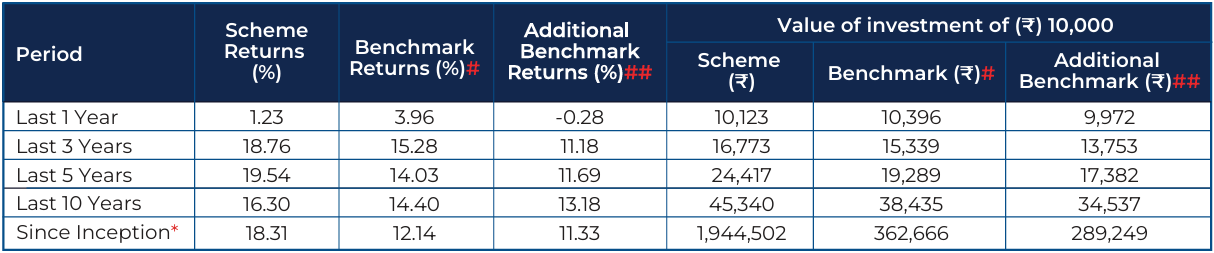
Common notes for the above table A & B: Past performance may or may not be sustained in future and is not a guarantee of any future returns. *Inception Date: January 1, 1995. The scheme is managed by Mr. Amit Ganatra since February 01, 2026. # NIFTY 500 Index (TRI). ## Nifty 50 Index (TRI). The above returns are of Regular Plan – Growth Option. Returns greater than 1 year period are compounded annualized (CAGR). Load is not taken into consideration for computation of performance. Different Plans viz. Regular Plan and Direct Plan have a different expense structure. The expenses of the Direct Plan under the Scheme will be lower to the extent of the distribution expenses / commission charged in the Regular Plan. As NIFTY 50 TRI data is not available since inception of the scheme, additional benchmark performance is calculated using composite CAGR of NIFTY 50 PRI values from January 1, 1995 to June 29, 1999 and TRI values since June 30, 1999. Above returns are as on April 30, 2026.
For performance of other funds managed by fund manager, Please click here.
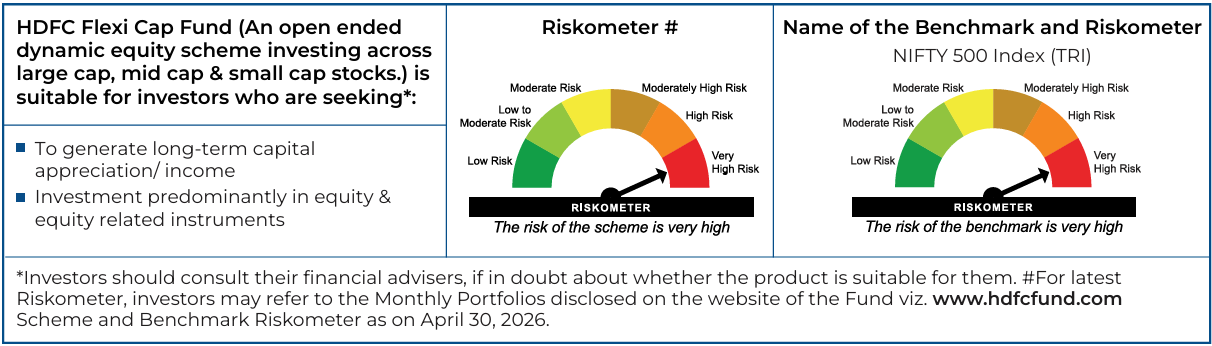
Views expressed above are indicative and should not be construed as investment advice or as a substitute for financial planning.
Due to the personal nature of investments, investors are advised to seek professional advice before investing.
MUTUAL FUND INVESTMENTS ARE SUBJECT TO MARKET RISKS, READ ALL SCHEME RELATED DOCUMENTS CAREFULLY.
Stay ahead with our insights
Did you find this interesting?
Your opinion matters - share your thoughts and help us improve.