- Entering text into the form field will trigger a list of options
Trending Searches
- Invest / Login
About HDFC Nifty LargeMidcap250 Plus 8-13 yr G-Sec 70:30 Index Fund
This Fund aims to benefit from the growth potential of Equity with the stability of Debt, it is an open-ended Equity Oriented Hybrid Index Fund that tracks the Nifty LargeMidcap250 Plus 8-13 yr G-Sec 70:30 Index (TRI). It sits in the equity-oriented hybrid index fund category and aims to deliver returns that correspond to the performance of this index, before fees and expenses and subject to tracking error, by holding the same securities in broadly the same proportion as the index.
The index blends two asset classes in a fixed 70:30 ratio:
The index is made up of:
- 70% Equity - the Nifty LargeMidcap 250 Index, which gives diversified exposure to 100 Large Cap and 150 Mid Cap companies, carrying the growth potential of the equity market
- 30% debt - the Nifty 8-13 yr G-Sec Index, made up of liquid Government securities with maturity between 8 to 13 years, which aim to lend a measure of stability to portfolios
Pairing Equity with Debt, it is designed to let investors participate in Equity growth while the Debt portion helps cushion some of the ups and downs. To keep the 70:30 balance steady as markets move, the index is rebalanced every month. Because the Fund replicates this index, it holds at least 95% of its assets in the index's securities, with a small balance in debt and money market instruments@ for liquidity. It is benchmarked against the Nifty LargeMidcap250 Plus 8-13 yr G-Sec 70:30 Index (TRI).
@Plain Vanilla Debt Securities, Government Securities, T-Bills and Money Market Instruments, Repo on Government Securities, Units of Liquid and Overnight schemes of Mutual Fund
What is HDFC Nifty LargeMidcap250 Plus 8-13 yr G-Sec 70:30 Index Fund?
At its simplest, this is a single fund that invests in both shares and government bonds together, in a fixed 70:30 mix, by mirroring a market index.
It brings together a few ideas. As an index fund, it is passively managed: instead of a Fund Manager deciding what to hold, it aims to track the securities in its index, so its returns move in line with that of the index, subject to tracking error. The Equity portion spreads across Large Cap and Mid Cap companies, which tend to offer growth over the long run. The Debt portion holds government securities, bonds issued by the Government of India, which generally have lower risk than Equities. Holding both in one fund means you get a Equity-and-Debt mix without having to combine separate funds yourself or rebalance them over time.
Who can consider HDFC Nifty LargeMidcap250 Plus 8-13 yr G-Sec 70:30 Index Fund?
This fund may suit investors who:
- Want exposure to both Equity and Debt through a single, combination rather than managing separate funds.
- Are looking for Equity participation but would prefer some cushioning from the Debt portion over pure Equity.
- Are comfortable with a passive, index-tracking approach rather than active selection.
- Are seeking long-term wealth creation and can stay invested through market cycles, typically five years or more.

Returns
NA
Inception Date
23/10/2026
High
Min SIP
₹ 100
Ideal for
Wealth Creation
3 Years and above
An entry load is a fee charged to investors when they purchase units of a Mutual Fund scheme. This fee was used to cover distribution and marketing expenses incurred by the Asset Management Company (AMC). Currently, Mutual Funds in India do not levy entry loads.
NA
A lock-in period is the fixed duration during which investors cannot sell or redeem their investments/Mutual Fund units. For example, Equity Linked Savings Schemes (ELSS) Funds have a 3-year lock-in.
NA
Net Asset Value (NAV) per unit is the total market value of securities of a scheme minus liabilities divided by the total number of outstanding units on a given date.
NA
Assets Under Management (AUM) is the total market value of all assets that a Mutual Fund manages on behalf of its investors.
₹0.00 Cr.
A benchmark is a standard market index used to compare a Fund’s performance. It helps investors know whether the Fund is performing better, worse, or similar to the market.
HDFC Nifty LargeMidcap250 Plus 8-13 yr G-Sec 70:30 Index Fund
NAV and Historical Performance
Benchmark Performance
Fund Managers
Downloads
HDFC Nifty LargeMidcap250 Plus 8-13 yr G-Sec 70:30 Index Fund
Exit Load
NAProduct Labelling
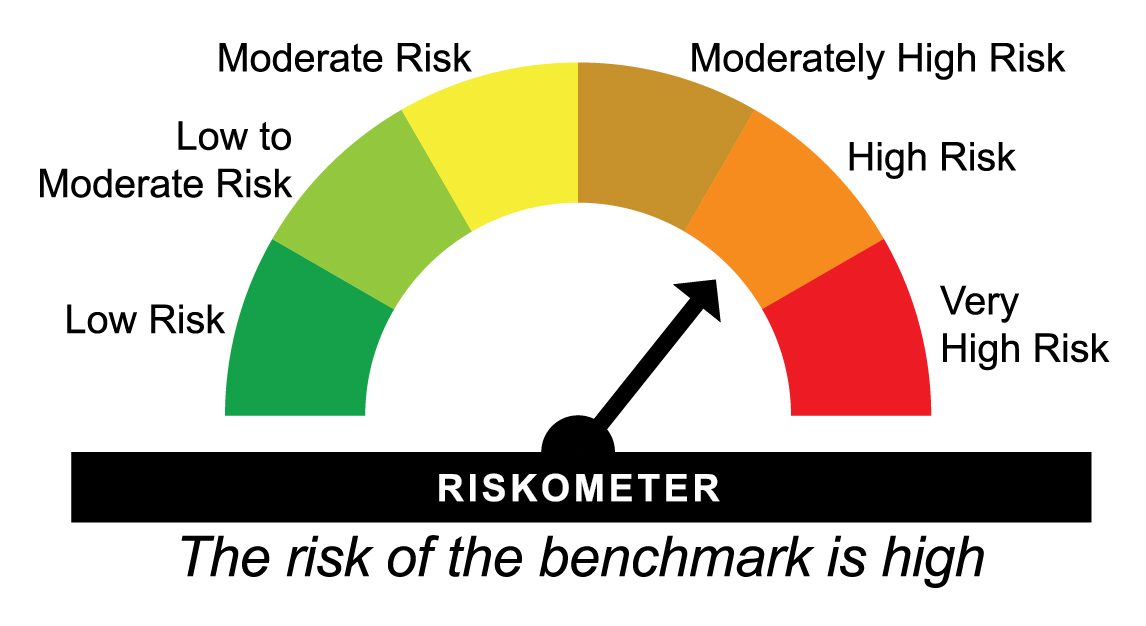
Benchmark Riskometer

FAQs
The fund tracks the Nifty LargeMidcap250 Plus 8-13 yr G-Sec 70:30 Index (TRI) that blends Equity and Debt in a 70:30 ratio. The 70% Equity portion follows the Nifty LargeMidcap 250 Index, covering 100 large cap and 150 Mid Cap companies. The 30% debt portion follows the Nifty 8-13 yr G-Sec Index, made up of of liquid Government securities with maturity between 8 to 13 years. At least 95% of the fund's assets are held in these index securities, with up to 5% in debt and money market instruments@ for liquidity.
@Plain Vanilla Debt Securities, Government Securities, T-Bills and Money Market Instruments, Repo on Government Securities, Units of Liquid and Overnight schemes of Mutual Fund
It means that, as per the index, around 70% of the portfolio is invested in Equity and 30% in Debt. Over time, as Equity and Debt move differently, this balance naturally drifts. To keep it close to 70:30, the underlying index is rebalanced every month, and the fund follows suit. This saves investors from having to track and rebalance an equity-debt mix themselves.
The fund is passively managed. Rather than a fund manager choosing securities, it aims to hold the same equity and debt securities as its underlying index, in broadly the same proportion. When the index is rebalanced, the fund adjusts its holdings to stay aligned. Its returns therefore track the index, with a small difference known as tracking error arising from costs, cash holdings and the mechanics of replication.
The minimum investment is Rs 100, and you can invest through a lump sum or an SIP.
No. The fund does not charge an entry or exit load
Because it holds about 70% in equity, the fund's value moves largely with the stock market and can be volatile over shorter periods, though the 30% Debt portion is intended to soften some of that movement. Being passive, it mirrors the make-up of its underlying index and does not try to take active decisions; its returns can also differ from the index due to tracking error. It is generally positioned between a pure Equity fund and a pure Debt fund on risk.