
- Entering text into the form field will trigger a list of options
Trending Searches
- Invest / Login
Register Now
Zindagi Ke Liye SIP
Just like life’s small, consistent efforts lead to big rewards, SIP turns steady investments into long-term growth
Zindagi Ke Liye SIP
Why choose SIP to start your investment journey?

Ease of starting
No need for large investment amounts—SIPs can begin with as little as ₹100/month. You can also select the frequency and tenure based on your convenience.

Automated & Disciplined
Payments are auto-debited from your Bank account making investing disciplined and completely hassle-free.

Potential For Higher Growth
As markets are bound to remain volatile, regular investing gives you freedom from market timing and benefit from volatility.
Demystifying Mutual Funds and SIPs
Let’s demystify the myths behind investing and SIPs
Mutual Funds are too risky, I could lose my money
I am not that tech savvy.
I don’t know which fund to invest in
I already invest in FDs and Gold, so I don’t need anything else
I am too young to invest.
I need a lot of money to invest in Mutual Funds
Lets get you started on
your SIP Today


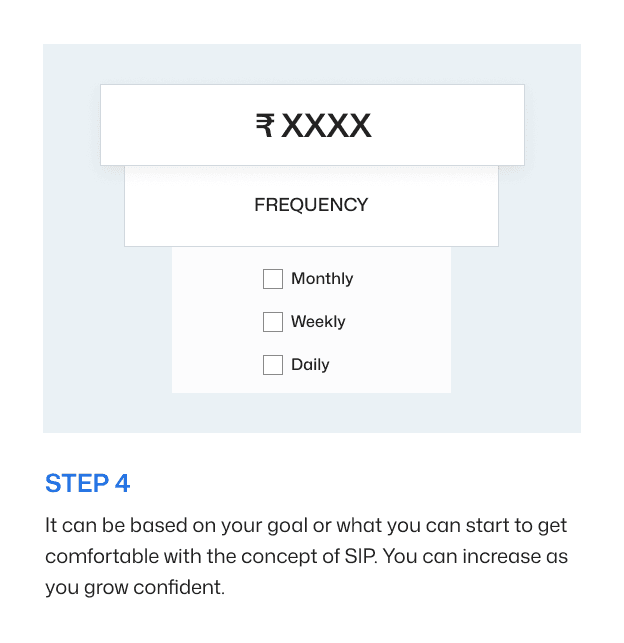
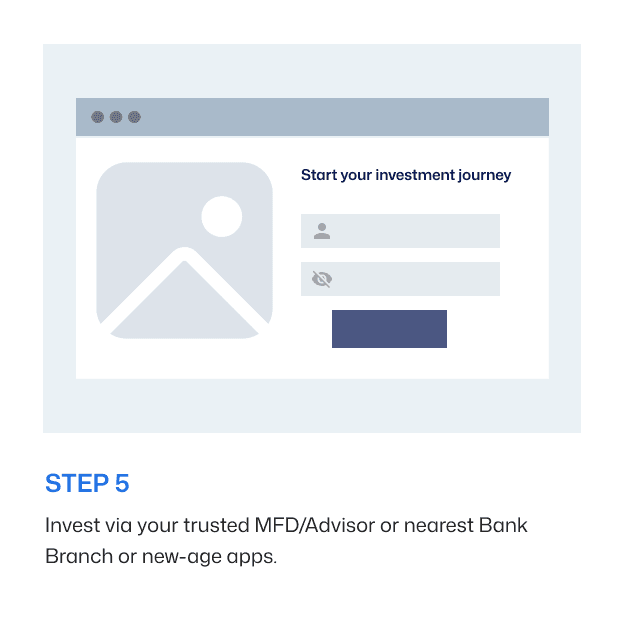
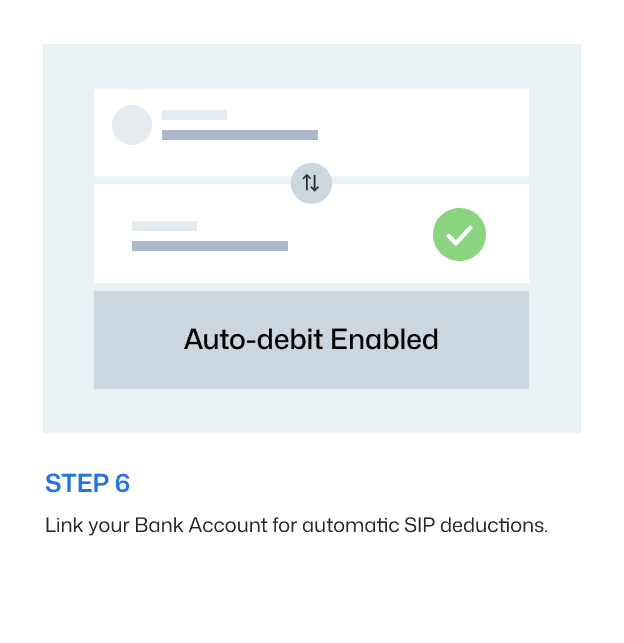

See your SIP growth in action
Use the HDFC SIP Calculator to estimate your returns and plan your investments with confidence
Disclaimer : This tool has been designed for information purposes only. Actual results may vary depending on various factors involved in capital market. Investor should not consider above as a recommendation for any schemes of HDFC Mutual Fund. Past performance may or may not be sustained in future and is not a guarantee of any future returns.
- SIP Calculator
- SIP Goal Calculator
Investing frequency
- Daily
- Weekly
- Monthly
- Quarterly
Expected Rate of Return
SIP Duration
Total Investment
₹0
Total SIP Value
₹0
YOUR EARNING’S
₹ 0We Get It, You May Still Have Questions
Watch how the SIP story unfolds
FAQs

An Investor Education And Awareness Initiative
Visit https://www.hdfcfund.com/information/key-know-how to know more about the process to complete a one-time Know Your Customer (KYC) requirement to invest in Mutual Funds. Investors should only deal with registered Mutual Funds, details of which can be verified on the SEBI website (www.sebi.gov.in/intermediaries.html). For any queries, complaints & grievance redressal, investors may reach out to the AMCs and / or Investor Relations Officers. Additionally, investors may also lodge complaints directly with the AMCs. If they are not satisfied with the resolutions given by AMCs, they may raise complaint through the SCORES portal on https://scores.sebi.gov.in/scores-home/. SCORES portal facilitates investors to lodge complaint online with SEBI and subsequently view its status. In case the investor is not satisfied with the resolution of the complaints raised directly with the AMCs or through the SCORES portal, they may file any complaint on the Smart ODR on https://smartodr.in/login.