
- Entering text into the form field will trigger a list of options
Trending Searches
- Invest / Login
Systematic Investment Plan: Moving from Good to Great with Goal-Based Planning

Last Updated On: 15 May 2026


Many investors start a Systematic Investment Plan with good intentions but without a clear direction. They invest regularly, which is commendable, but they often lack a specific purpose for their investments. By the time they realize the importance of focused investing, they may have accumulated funds that aren't aligned with their actual financial needs.
The good news is that transforming your SIP strategy is straightforward. You likely already have the investing habit established. This puts you in a better position to redirect your investments with purpose now. With clarity and the right approach, moving from a generic SIP to a goal-based strategy can lead to meaningful wealth creation.
In this article, you will learn how you can enhance your SIP strategy through goal-based planning and get answers to the most common questions that might be in your mind regarding the same.
Understanding SIPs and Their Benefits
So, what exactly is a Systematic Investment Plan (SIP)? At its core, an SIP is a simple instruction you give to a mutual fund to invest a fixed amount of money at regular intervals (usually monthly). Think of it like a financial EMI, but instead of paying off a loan, you are paying yourself first by building assets.
This approach is powerful for several reasons:
Financial Discipline: SIPs automate your savings, instilling a regular investing habit. They remove emotion from this process.
Accessibility: You can start investing with very small amounts, sometimes as low as ₹100, making it accessible to everyone.
Rupee Cost Averaging: When markets are low, your fixed SIP amount buys more mutual fund units. When markets are high, it buys fewer. Over time, this averages out your purchase cost, reducing the risk of "timing the market."
Power of Compounding: By investing regularly over a long period, your investments don't just grow. In fact, your earnings start earning their own earnings. This is the magic of compounding, which can turn small, regular investments into a significant corpus over time.
Read : Why ‘SIP it’ is a better strategy than ‘buy low, sell high’ strategy to understand advantages of SIP
The Importance of Goal-Based Planning
A regular SIP is good, but a goal-based SIP is great. Why? Because it gives your money a job. Goal-based investing involves identifying specific financial dreams: Buying a house, funding your child's education, or building a retirement corpus. It then creates a dedicated investment plan to achieve each one.
This approach gives you clarity of purpose that is often missing from investing. When you know why you are investing, you are no longer just saving; you are actively building towards a tangible, exciting future. This clarity helps you manage your emotions, like fear or greed, during market ups and downs.
It also helps you avoid overspending on things that don't matter, as your budget is now aligned with your biggest aspirations.
Most importantly, it helps you avoid making impulsive withdrawals, as you know that taking money out is directly stealing from your future self's goals.
Steps to Implement Goal-Based SIPs
Once you understand the power of goal-based investing, the implementation becomes a structured process. To set up effective goal-based SIPs, follow these key steps:
Identify and Prioritize Your Goals: Start by listing everything you want to achieve. Separate them into short-term (1-3 years, like a vacation), medium-term (3-5 years, like a car down payment), and long-term goals (5+ years, like retirement or your child's higher education). Then, rank them by importance.
Quantify Your Goals: A goal without a number is just a wish. You must assign a specific rupee value to each goal. For long-term goals, you must factor in inflation. A ₹20 lakh education cost today could easily be ₹50 lakh in 15 years.
Assess Your Risk Profile: Your ability and willingness to take risks will be different for each goal. For a short-term goal, you can't risk losing money, so you'd choose safer investments. For a long-term goal like retirement, you can afford to take more risk (by investing in equities) for a chance at higher, inflation-beating returns.
Select Investments & Set Up SIPs: Choose the right mutual funds that align with each goal's time horizon and risk profile. For long-term goals like retirement, consider solution-oriented products such as HDFC Retirement Savings Fund or HDFC Children's Fund for education. Then, set up a separate, dedicated SIP for each specific goal.
Advantages of Goal-Based SIPs
When you link every SIP to a goal, you unlock a powerful set of psychological and financial benefits that go far beyond a normal investing habit.
Clarity and Focus: Your investment decisions become crystal clear. Instead of wondering, "Which is the best fund?" you ask, "Which could be the appropriate fund for this specific goal?"
Better Emotional Control: Markets will always be volatile. But when your SIP is for a goal 10 years away, a short-term market crash doesn't trigger panic.
Prevents Impulsive Withdrawals: It's much harder to dip into your savings when you know you aren't just taking "some money" but are taking "from the house down payment fund" or "from the child's education fund." This creates a strong mental barrier against frivolous withdrawals.
Smarter Budgeting: Goal-based SIPs force you to create a budget that aligns with your true aspirations. By allocating a fixed amount to each goal every month, you automatically avoid overspending on things that are less important to you.
Monitoring and Adjusting Your Goal-Based SIPs
Setting up your SIPs is not a one-time task. Success requires regular monitoring to ensure you remain on track toward your objectives.
Life circumstances change. You might receive a salary increase, have another child, or your priorities might shift. Plan to review your portfolio at least annually. During this review, evaluate if your investments are performing as expected. Are you on track to meet your target amount for each goal?
When you receive a bonus or salary raise, avoid lifestyle inflation. Instead, increase your SIP amounts proportionally. Many funds offer a "SIP Top-up" feature that automatically increases your contribution by a fixed percentage annually. This systematic approach accelerates progress toward your goals without requiring repeated manual decisions.
Regular reviews and adjustments keep your financial plan relevant and aligned with your evolving life.
How HDFC Mutual Fund/AMC Can Help You?
HDFC AMC offers a diverse range of investment schemes designed to help you systematically build wealth for retirement and other long-term goals. Here's how we can assist you:
Diverse Options: You can choose from a wide variety of mutual funds that match your personal risk tolerance and investment timeline, from equity funds for growth to debt funds for stability.
Professional Management: Your money is handled by experienced fund managers who aim to make informed investment decisions, saving you the effort of tracking the market daily.
Disciplined Investing: You can use tools like a Systematic Investment Plan (SIP) to invest a fixed amount regularly, which helps build discipline and average out your purchase cost over time.
Embrace the power of Goal-Based Systematic Investment Plans which may turn your aspirations into reality.
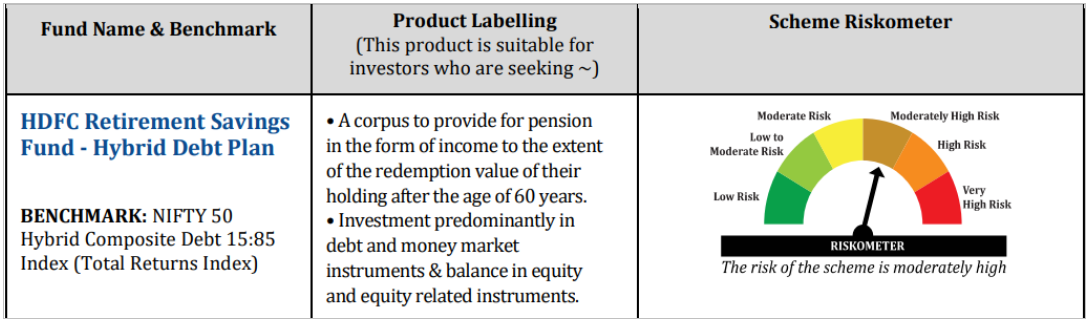
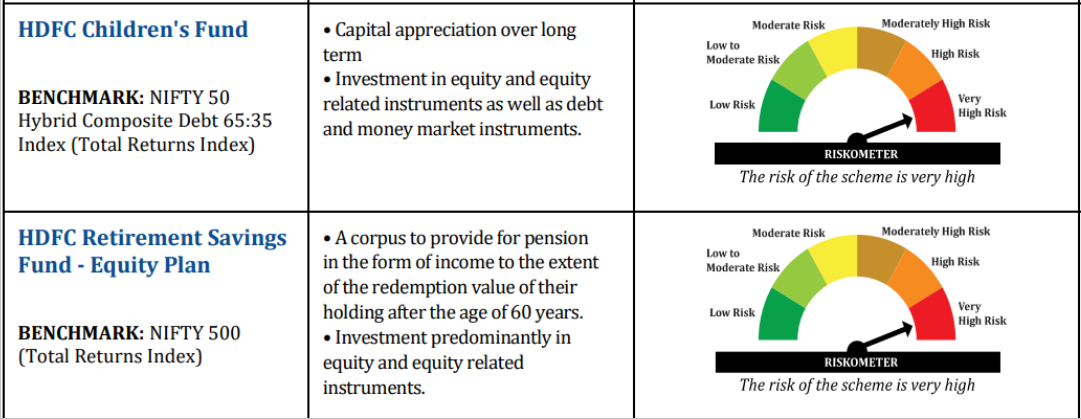
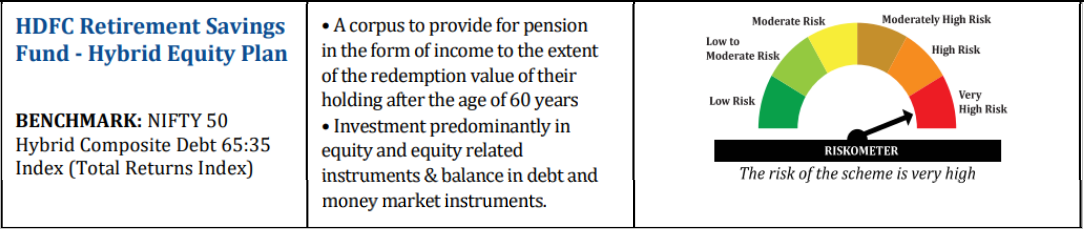
~ Investors should consult their financial advisers, if in doubt about whether the product is suitable for them
Riskometer is as on December 31, 2025
For latest riskometer, investors may refer to the Monthly Portfolios disclosed on the website of the fund viz. www.hdfcfund.com
Conclusion
SIPs are a fantastic tool for building wealth steadily and with discipline. But their true power is unlocked when you give every rupee a purpose. By aligning your investments with specific, well-defined financial goals, you move from just saving to strategically building the life you want. This approach provides clarity, emotional control, and a much higher probability of success. Embrace the power of goal-based SIPs and start turning your financial aspirations into a rewarding reality.
FAQs
1. Can I change my SIP amount later if my financial situation improves?
Yes. You can increase your SIP amount at any time, either manually or through automatic step-up features offered by many mutual funds.
2. How many different SIPs should I have for my goals?
It depends entirely on your goals and financial capacity. Ideally, have at least separate SIPs for your major goals like retirement, children's education, or home purchase etc.
3. What if I need to pause my SIP temporarily?
Most mutual funds allow you to pause your SIP for a few months without canceling it. However, this should be avoided unless necessary, as it disrupts your investment discipline.
4. Should I invest in the same fund for different goals?
Different goals may have different time horizons and risk profiles. For eg. A retirement goal 20 years away can tolerate more equity exposure than a house down payment needed in 3 years.
5. Do I need a financial adviser to set up goal-based SIPs?
While not mandatory, it's highly recommended. An adviser helps you quantify your goals accurately, select appropriate funds, and keeps your plan on track through regular reviews.
Stay ahead with our insights
Did you find this interesting?
Your opinion matters - share your thoughts and help us improve.